menu
WE NOW HAVE 2 LOCATIONS 186 FRASER STREET, TAURANGA & 200 LAKES BOULEVARD, PYES PA
Losing teeth changes more than your smile. It can affect how you speak, what you eat, and the way your face is supported. Dentures restore confidence, improve clarity of speech, make meals enjoyable again, and help support facial muscles. Depending on what you need, you can choose full dentures (replacing all teeth in the upper or lower jaw) or partial dentures (replacing one or several missing teeth while working alongside your natural teeth).
Full dentures replace an entire arch. They are usually made from high-quality acrylic and customised for tooth shade, size and gum contour so they look natural. They may be:
• Immediate dentures – placed on the same day your remaining teeth are removed. This avoids a toothless period and supports your facial profile straight away. However, gums and bone shrink as they heal, so immediate dentures commonly need relines and adjustments in the first months.
• Conventional (delayed) dentures – fitted after gums and bone have healed and stabilised (usually several weeks). They often provide a more stable long-term fit from day one.
Partial dentures fill the gaps when you still have some natural teeth. They can be:
• Acrylic – often more affordable and easy to adjust; useful as a transitional option.
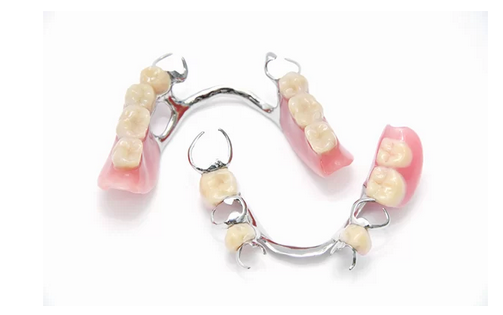
• Cobalt-chrome (metal framework) – thinner, lighter and typically more secure thanks to precision clasps; a great long-term solution.
• Hybrid designs – combining metal frameworks with acrylic flanges for strength and aesthetics.
Before a partial denture is made, all remaining teeth are examined and treated as needed to ensure a healthy foundation.
Modern dentures use acrylic resins for gums and teeth, often with layered shades for realism. Metal frameworks (in certain partials) add strength, thinness and comfort. For extra stability, some patients choose implant-retained overdentures, where two or more small implants anchor the denture firmly—particularly helpful for lower full dentures.
1. Consultation & planning
We discuss your goals, assess oral health, and talk through full vs partial options, materials, timeline and costs. If extractions are needed, we plan the sequence and consider immediate vs delayed fitting.
2. Impressions & bite records
Precise moulds of your mouth and measurements of how your jaws meet guide the lab in crafting an accurate fit and natural bite.
3. Try-in
A wax mock-up lets you see the smile before the final denture is finished. We refine tooth position, shade and speech at this stage.
4. Fit appointment
Your finished denture is fitted and pressure points adjusted. We provide advice on speaking, eating and care. Immediate dentures may need more frequent early adjustments.
5. Review & aftercare
Follow-ups fine-tune comfort and bite. As gums settle, we may recommend a reline to improve the fit. We’ll also schedule routine checks to keep your mouth and denture in top condition.
• Confidence & appearance – natural-looking teeth and supported cheeks/lips.
• Clearer speech – especially for sounds that rely on front teeth.
• Better nutrition – improved chewing broadens your food choices.
• Oral health – evenly spreads bite forces and protects remaining teeth (for partials).
• Eating: start with soft foods cut small; chew on both sides to keep the denture stable.
• Speaking: read aloud for a few minutes daily; any lisp usually improves quickly.
• Soreness: mild pressure points are common early on—don’t wait; book an adjustment.
• Daily cleaning: brush the denture with a soft brush and non-abrasive cleanser; rinse after meals.
• Soak nightly: use a recommended denture solution; never hot water (it can warp acrylic).
• Mouth care: clean your gums, tongue and any remaining teeth; use fluoride as advised.
• Adhesives: can help in specific situations—use sparingly and let us show you the best technique.
• Relines & replacement: the fit changes as bone naturally remodels. Expect periodic relines and, over time, replacement to maintain comfort and function.
• Immediate dentures avoid a gap after extractions and support appearance right away. Expect more adjustments and a planned reline once healing settles.
• Delayed dentures typically require less early maintenance and can feel more stable from the outset, but you’ll be without teeth during the healing phase (temporary options can bridge this period if needed).
Two to four small implants can anchor a denture with clips or bars, improving grip, chewing power and confidence—especially for lower full dentures that otherwise rely on suction and muscle control. We’ll assess bone levels and discuss whether this is right for you.
Will people notice?
Modern materials and careful tooth positioning create a natural, age-appropriate smile.
How long do dentures last?
With good care and regular checks, many last 5–8 years before a remake is sensible. Fit often needs relines sooner due to natural bone changes.
Can I sleep in them?
We usually advise removing at night to let tissues rest and reduce the risk of infections.
Ready to explore your options?
Whether you need a full denture, a partial, or are curious about implant-retained solutions, the team at Duncan Dental will guide you—from first conversation to comfortable, confident smiles.
Book a consultation and let’s plan a denture that looks right, feels secure and works brilliantly for your everyday life.

We are here to help and we are only a phone call away so give us a call today.