menu
WE NOW HAVE 2 LOCATIONS 186 FRASER STREET, TAURANGA & 200 LAKES BOULAVARD, PYES PA
Hearing that you may need a root canal can sound daunting, but root canal treatment is a common dental procedure designed to relieve discomfort and, importantly, help save a natural tooth that might otherwise need to be removed.
One of the difficulties is knowing when a problem with a tooth has progressed beyond needing a simple filling or other treatment. Sometimes the signs are obvious, such as significant toothache or swelling. In other cases, there may be very few symptoms at all.
At Duncan Dental in Tauranga, we assess each tooth carefully to determine the cause of the problem and whether root canal treatment is the most appropriate option.
Inside every tooth is soft tissue known as the dental pulp, which contains nerves, blood vessels and connective tissue. If this pulp becomes inflamed or infected, it may no longer be possible for the tooth to recover on its own.
Deep tooth decay is one of the most common causes, but the pulp can also become damaged following an injury, a crack in the tooth, problems with an existing filling or significant wear.
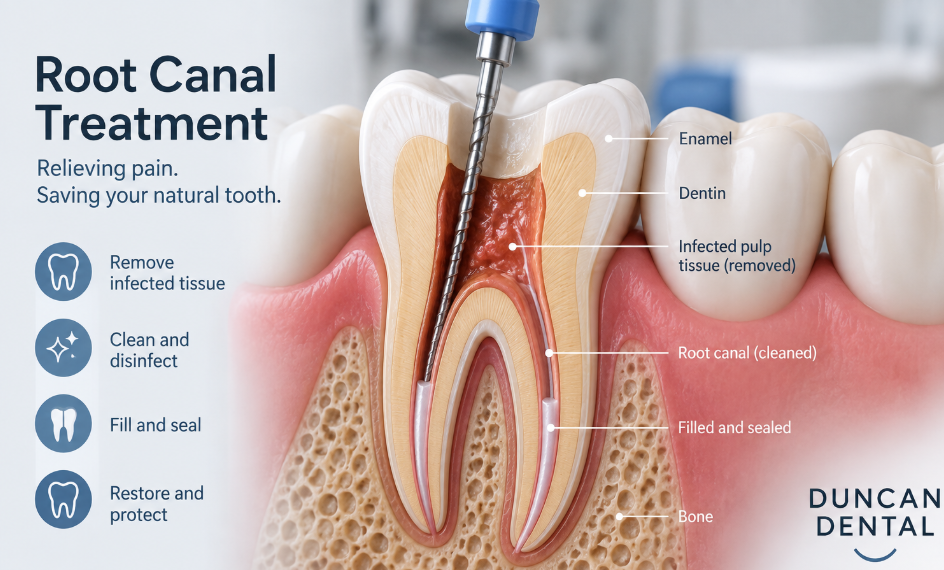
Root canal treatment involves removing the damaged or infected pulp from inside the tooth. The root canals are then carefully cleaned, disinfected, shaped and filled before the tooth is sealed. A crown or another restoration may subsequently be recommended to help protect and strengthen the treated tooth.
The aim is simple: remove the source of infection while preserving as much of your natural tooth as possible.
Symptoms vary considerably from person to person. Some of the warning signs that should prompt a dental assessment include:
• Persistent or severe toothache
• Pain when biting or chewing
• Increased sensitivity to hot or cold
• Swelling or tenderness around a tooth
• Swollen or tender gums
• A cracked, chipped or badly damaged tooth
• Discolouration or darkening of a tooth
• A recurring pimple or swelling on the gum
Having one of these symptoms doesn't automatically mean you need root canal treatment. Tooth pain and sensitivity can have several causes, which is why it's important to have the tooth professionally assessed.
Yes. This is an important point because many people associate root canals with severe toothache.
A tooth requiring root canal treatment doesn't necessarily cause obvious symptoms. Duncan Dental notes that some affected teeth can be identified during a routine dental examination even when the patient hasn't experienced symptoms.
In some cases, a nerve inside a tooth may have deteriorated to the point that the initial pain has actually subsided. That doesn't necessarily mean the underlying problem has resolved.
Regular dental check-ups can therefore help identify problems before they become more complicated.
This is probably one of the most common concerns patients have.
Modern root canal treatment is carried out using local anaesthetic to numb the tooth and surrounding area. Duncan Dental describes root canal treatment as generally involving little or no pain while the tooth is anaesthetised. Some tenderness or discomfort can occur afterwards as the tissues around the tooth settle.
In fact, it's often the infection or inflammation inside the tooth that causes significant discomfort rather than the root canal treatment itself.
If dental treatment makes you anxious, tell your dentist. Understanding what will happen and having the opportunity to ask questions beforehand can make the experience much less intimidating.
Treatment begins with an examination of the affected tooth. Dental X-rays may be used to assess the tooth, its roots and the surrounding structures.
Once the area has been numbed, your dentist creates a small opening in the tooth to access the pulp chamber. The inflamed or infected tissue is removed and the canals inside the roots are carefully cleaned, disinfected and shaped.
The canals are then filled and sealed to help prevent bacteria from re-entering them.
Depending on the tooth and the amount of remaining tooth structure, further restorative treatment may be required. A dental crown is commonly recommended following root canal treatment to protect the tooth and restore its strength and function.
Treatment can take more than one appointment depending on the individual tooth and its condition.
When a tooth is badly infected or damaged, people sometimes wonder whether it would be easier simply to have it removed.
Where a tooth can be predictably restored, preserving the natural tooth has several advantages. Removing a tooth leaves a gap, and neighbouring teeth can gradually move towards that space. Missing teeth can also affect chewing and may eventually require replacement with a bridge, denture or dental implant.
Duncan Dental therefore considers root canal treatment an option for saving a tooth that might otherwise require extraction.
There are situations where a tooth is too badly damaged to save, however, so the appropriate treatment depends on the condition of the individual tooth.
An infection inside a tooth isn't something to ignore.
Without appropriate treatment, infection can spread beyond the tooth into the surrounding tissues and may result in an abscess, swelling and increasing discomfort. Deep decay can also continue to weaken the tooth, potentially making it more difficult to save.
If you're experiencing persistent tooth pain, swelling or other unusual symptoms, arranging an assessment sooner rather than later gives your dentist the opportunity to identify what's happening and discuss your treatment options.
If you're experiencing toothache or have concerns about a damaged or infected tooth, the team at Duncan Dental can assess the problem and determine whether root canal treatment may help preserve your tooth.
Duncan Dental provides root canal treatment from its Tauranga dental practices at 186 Fraser Street and Lakes Dental, 200 Lakes Boulevard in Pyes Pa.
Our goal is always to explain your options clearly and recommend treatment based on the health and long-term outlook of your tooth.
If something doesn't feel right, don't wait for tooth pain to become severe. Book an appointment with Duncan Dental in Tauranga and let our team take a closer look.
How do I know if I need a root canal?
Persistent toothache, sensitivity, pain when biting, swelling or a damaged tooth can all warrant investigation. However, some teeth requiring root canal treatment have few or no symptoms, so a dental examination is necessary to determine the cause.
How long does root canal treatment take?
The time varies according to the tooth and complexity of treatment. Duncan Dental advises approximately 60–120 minutes per procedure and one to three visits as a general guide.
Will I need a crown after a root canal?
Not every situation is identical, but a crown or other restoration is often used after root canal treatment to protect the treated tooth and restore its function.
Can a root canal save my natural tooth?
That is the primary purpose of the treatment. Root canal therapy removes infected or inflamed tissue from inside the tooth so that, where appropriate, the natural tooth can be retained rather than extracted.
Should I see a dentist if my toothache disappears?
Yes, particularly if you've experienced significant or persistent pain. The disappearance of pain doesn't necessarily mean the underlying problem has resolved, so it's worth having the tooth assessed.

We are here to help and we are only a phone call away so give us a call today.